







ArchViz_

Comments on finished work
User avatar
Magog
Posts: 48
Joined: 06 Jul 2009, 15:37
Skype: e-Magog

ArchViz_

Post by Magog » 10 Apr 2010, 09:53

Hello everyone!

This is my first post, I always read this wonderful forum and now is the time to send some work.

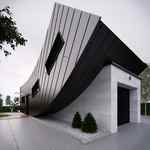
It 'been a ArchViz Challenge, hope you like.

C & C required.


Image


Softimage2011 - Mr
Post Product. : Photoshop


Sorry for my English.


Magog_

User avatar
Hirazi Blue
Administrator
Posts: 5113
Joined: 04 Jun 2009, 10:15

Re: ArchViz_

Post by Hirazi Blue » 10 Apr 2010, 10:03

Looks good...
But Softimage 2011 already??? ;)
Stay safe, sane & healthy!

User avatar
Magog
Posts: 48
Joined: 06 Jul 2009, 15:37
Skype: e-Magog

Re: ArchViz_

Post by Magog » 10 Apr 2010, 10:16

I started with SI2010, and just download the 2011 version I swicht all on the new release, even for testing photometric light in SI2011. :)

User avatar
shushens
Posts: 192
Joined: 13 Jun 2009, 05:34
Skype: shushens
Location: Paderborn, Germany

Re: ArchViz_

Post by shushens » 10 Apr 2010, 13:00

Looks good! :) I do not have an eye for this sort of work though. Looks too mechanical to me.
I guess we can look at the bright side. Now under Autodesk pressure they had to include photometric lights, which they could have done ages ago, but for some reason they could not be arsed.
Did you use glossy refraction on the windows to the left? If you render them with normal glass material in a separate pass and then apply blur or something in FxTree, is it possible to get the same result? Just wondering, since glossy refration has a very very serious effect on render time.
My ill-maintained blog: http://visualdeceptions.info/blogger

User avatar
Magog
Posts: 48
Joined: 06 Jul 2009, 15:37
Skype: e-Magog

Re: ArchViz_

Post by Magog » 10 Apr 2010, 14:21

I rendered with several passes, AO, shadows, reflection, white matte for the grass.. and with photoshop I modified the levels to highlight the glossy for the left windows.

To save time you can use another method to blur the glass ..
Set on two diferent plane where you insert images of the background.
In the first plane insert the normal image visible only primary rays, and the other insert the picture with blur effect and visible only to the secondary rays.
This way you avoid wasting valuable time by calculating the glossy refraction / reflection.

I hope I have answered your question.


Sorry for my English.