







































http://www.cgw.com/Publications/CGW/201 ... V9BBpP-G5K
Even though it was loosely about Maya and working with Pixars own in house programs it rings true for SI as well.
The money quote for me, was this
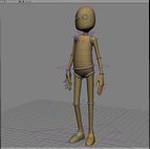
Character supervisor Bill Sheffler began working on the new system in 2007 when
Ratatouille wrapped. “A code base over 20 years old or so can reach an end of life,” he says. “You can’t make big changes and push yourself further. We kept the best workflows, but this is a first-rate new code base for us to expand on. The big benefit is that our IK systems are better, sculpting and weighting tools are better, and we can do better layering, referencing, and class structures within the rigs. And, it’s more WYSIWYG.”
Really good article on Pixars'Brave
-
angus_davidson
- Posts: 583
- Joined: 20 Dec 2012, 04:13
- Skype: ithacapellin
Really good article on Pixars'Brave
--
Technomancer at Digital Arts
Wits University
Technomancer at Digital Arts
Wits University
-
Bullit
- Moderator
- Posts: 2621
- Joined: 24 May 2012, 07:44
Re: Really good article on Pixars'Brave
Thanks.
Part of this is ICE like:
And Softbody, Syflex for characters?
Reminds me of something...
Part of this is ICE like:
He treated the vegetation that grew on the rocks, trees, and up from the ground differently from that without supporting geometry. For the former: “We’d start with 3D models and go polygon by polygon in the mesh,” Quilez explains. “For every quad, we would generate random points, and from those points we would grow flowers, leaves, and something else.”
For the latter: “When we didn’t have a mesh,” Quilez explains, “we’d place cubes where we wanted things to grow. These weren’t polygons; they were mathematical descriptions: This is the center, these are the sides, end of story. The code would use that to generate detail inside. We generated bushes out of nowhere.”
If you want to change something, you have to change the rules, which isn’t intuitive. When we wanted to change something, we’d go into the code and make the change.”
To grow the moss, Quilez would use the orientation of the surface. If the normals pointed down or horizontally, which suggested more water and less sun, the moss would have more clover. If the normals pointed up or vertically, which suggested more sun and less humidity, no clover would grow. “So, the clover followed the shape of the tree or rock,” he says. “We used these little tricks to make everything organic. If you just drop flowers everywhere, it doesn’t look natural. You need driven randomness.”
“You always think of CG as moving forward,” Quilez says. “But, it’s more like a spiral. We have faster computers now. And this was super fun. It was a dream. I love math, and to have a chance to use math to make images and beautiful movies was super cool.”
And Softbody, Syflex for characters?
Some of the major changes affected the way in which the technical directors rigged characters. “In the past, we would weight and sculpt by hand,” Sheffler says. “Now we fill a new character full of a kind of jelly, put an armature inside, pose the armature via simulation, and use that to extract shapes for rigging. We can have a fully, nicely simulated, rigged character in a couple days.”
The new system also automates the process of balancing blendshapes in faces and makes the process of rigging multiple characters easier. “You could think about a character as the sum of artistic opinions,” Sheffler says, explaining that a character’s rig file contains those artistic opinions, the decisions made as the rig evolves.
“It’s like a painting or drawing, except with a lot of ones and zeros,” Sheffler says. “If you were to look at it over time, like a time-lapse, you would see the artistic opinions in a particular syntax iterate and change slowly. You want to have a nice way to put those opinions in a global repository.”
Reminds me of something...
Simulation in 96% of the shots:Presto provides that global repository, which gives character riggers flexibility and speed: They can move rigs in part or wholly from one character to another. “Say you want to see the work on master characters propagated into hundreds,” Sheffler says. “This is a class system we couldn’t do in the past—pushing work from one to multiple places in a dynamic fashion. Now, we can mix and match layers and define how one inherits another—the shape of a face, maybe, or a control within a face. We have a space in which the system can interpolate those artistic opinions.”
Interesting about CPU overhead in this specific case:The studio estimates that 96 percent of the shots in Brave had some form of simulation. To handle hair and cloth simulation, Claudia Chung led a team of 16 simulation artists, five tailors and four groomers, and four simulation leads. In addition to work specifically on shots, the team handled changes to the pipeline caused by the switch to Presto.
Petrovitch, who had responsibility for hair modeling and simulation for Brave, had identified a problem with FizT: To move the volume of hair in Merida’s design without producing a tangled mess, every part of every curly strand had to see every other strand, which FizT could do, but not as fast as they would need. Merida’s thick hair was too long and curly.
“At that time, Andy was really into multiprocessing,” Chung says. “One of the solutions he came up with was that at the initial start of the simulation, the system could figure out which hairs cared more about each other and, depending on algorithms, could send groups of hairs to different processors. That way, we could run the simulations somewhat independently while keeping track of whether the groups cared about each other.” The team discovered that Merida’s hair ran best on eight processors. Beyond that, the overhead caused by having the groups talk to each other outweighed the advantages of multiprocessing.
-
oglu
- Posts: 16
- Joined: 19 Aug 2011, 09:40
Re: Really good article on Pixars'Brave
all those vegetation and stone placement is done with xGen wich is licenced by autodesk last year i think... 
and xGen is a very technical tool... not so easy to handle for a standard artist...
and xGen is a very technical tool... not so easy to handle for a standard artist...