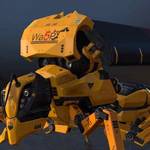
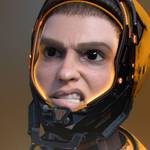
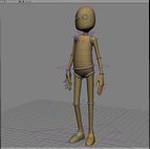
Alt created a CG version of the rover to help add subtle emotional cues in its performance.
Modelled, animated and lit in XSI, this project was our first using Arnold. We love it.
Hybride did 45 shots for the movie. If you read the article, you will find numerous studios worked on the FX for the movie. Max/Maya/Softimage were used as well as Houdini, Realflow, FumeFX, Nuke, Mari, Arnold, VRay, Exocortex Slipstream, Creation Platform from Fabric Engine, Thinking Particles ... you name it.
Quite a complex pipeline to integrate all those shots from so varied Studios pipelines.
Detailed explanation by Mathieu Leclaire, Head of R&D, Hybride Technologies on the mailing list:
Somehow I was frankly quite underwhelmed by this. Technically stunning but crashing violently in the "uncanny valleÿ". If they'd done it slightly more stylized, not laying all the focus on the near-realism of virtual-Lee the spot could have been so much better IMHO.
;)
Studio AKA created this set of animations to shine a light on BBC Radio 4’s cultural offerings
Award-winning London-based animation studio Studio AKA was recently commissioned through the BBC, Red Bee Media and communications agency Karmarama to create this series of animations. Responsible for the entire production, the Studio AKA team started working its magic in Softimage and After Effects. “The most important module within Softimage was ICE,” explains Softimage generalist Cristobal Infante. “We also used Mootzoid’s emTools compounds extensively for this job. ICE helped us to keep the elements and effects as flexible as possible throughout production.”
Using efficient techniques and tools within the chosen software, each animation was told visually via the process of morphing sequences that utilise clever transitions to move seamlessly from one scene to another. “We took full advantage of reference models within Softimage,” says Infante. “We broke the job down into sections but kept rendering centralised, all this can done by setting the deltas correctly on the referenced models. Our pipeline, built with Python and PyQt, allowed us to keep track of all the shots: this really helped us get through production smoothly.”